
I have committed to 30 days of the Whole 30.
You may be thinking. “What the heck is the Whole 30?”

It’s an “original nutritional program designed to change your life in 30 days. Think of it as a short-term nutritional reset, designed to help you put an end to unhealthy cravings and habits, restore a healthy metabolism, heal your digestive tract, and balance your immune system.
Certain food groups…could be having a negative impact on your health and fitness without you even realizing it.
So how do you know if (and how) these foods are affecting you? Strip them from your diet completely.
This will change your life.”
-Whole 30

Rules
- Eat real food. Meat, Eggs, Seafood, some fruit, lots of veggies, and plenty of good fats that come from oils, seeds, fruits, and nuts.
- Say “no” to ingredients you can’t pronounce.
- Don’t drink alcohol in any form, not even for cooking.
- No added sugar of any kind, real or artificial
- Do not eat grains.
- Do not eat dairy. This includes cow, goat or sheep’s milk products such as cream, cheese (hard or soft), kefir, yogurt (even Greek), and sour cream
- Do not eat legumes. No peanut butter or soy either.
- Don’t consume carrageenan, MSG or sulfites.
- One last and final rule: You are not allowed to step on the scale or take any body measurements for the duration of the program.
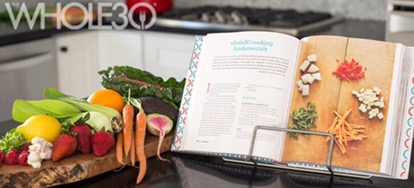
*the following is an except from the official Whole 30 website:
* The Fine Print
These foods are exceptions to the rule, and are allowed during your Whole30.
- Clarified Butter or Ghee. Clarified butter or ghee is the only source of dairy allowed during your Whole30. (Plain old butter is not allowed, as the milk proteins found in non-clarified butter could impact the results of your program.) Refer to our Butter Manifesto for details.
- Fruit juice as a sweetener. Some products will use orange or apple juice as a sweetener. We have to draw the line somewhere, so fruit juice is an acceptable ingredient during your Whole30.
- Certain legumes. We’re fine with green beans, sugar snap peas, and snow peas. While they’re technically a legume, these are far more “pod” than “bean,” and green plant matter is generally good for you.
- Vinegar. Most forms of vinegar (including white, balsamic, apple cider, red wine, and rice) are allowed during your Whole30 program. The only exceptions are vinegars with added sugar, or malt vinegar, which generally contains gluten.
- Salt. Did you know that all iodized table salt contains sugar? Sugar (often in the form of dextrose) is chemically essential to keep the potassium iodide from oxidizing and being lost. Because all restaurant and pre-packaged foods contain salt, we’re making salt an exception to our “no added sugar” rule. ***

So what’s the point? Why would a couple foodies like you and I even try this? Well, because. Because we are sick and tired of feeling sick and tired. Because we know that something is off but we don’t know what. We have a sneaking suspicion that we may be gluten-intolerant or have a dairy allergy. Or maybe we simply want to to feel our best and be the best versions of ourselves. After all, we only get one life, and one body to live it in!
Ready to join? Rest assured there is support waiting for you and tools to help you! Recipes, and forums, and shopping lists, oh my! Check out the Whole 30 website, and tell ’em Little Miss Healthy sent ya 😉
 Little Miss Coffee
3 thoughts on “Taking on the Whole 30 Challenge”